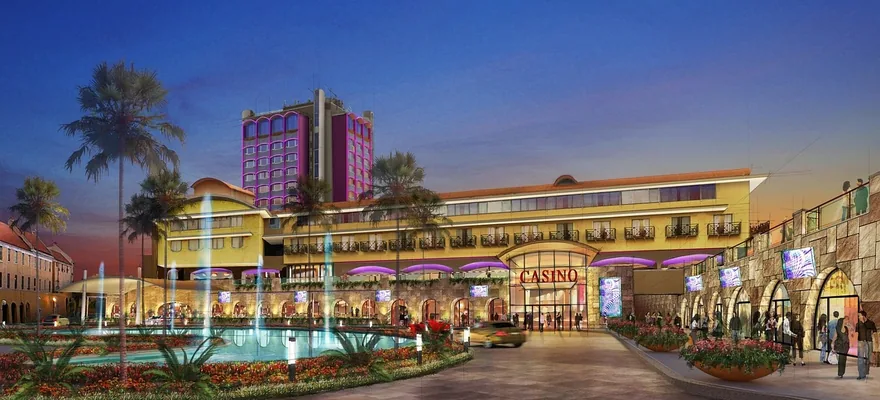
Casinos are often described as economic anchors, but their real influence moves through several connected channels. The most visible effect is employment: a casino requires dealers, hotel staff, food and beverage workers, security teams, maintenance crews, and administrative personnel. Those jobs support household income and local spending, even for residents who never enter the gaming floor.
Beyond payroll, casinos buy goods and services, attract out-of-town visitors, and contribute to public budgets through taxes, fees, or tribal revenue-sharing under compacts. The size and durability of these benefits are not automatic. They depend on whether the casino captures new spending from outside the region or mostly recirculates money that would have been spent locally anyway.
The direct economic footprint: jobs and payroll
A casino's most immediate economic contribution is its workforce. Large resort properties may employ thousands of people across dozens of job categories, while smaller card clubs or racetrack casinos employ far fewer. Jobs range from entry-level positions with on-the-job training to specialized roles in finance, marketing, surveillance, and facilities management. Because hospitality work tends to be labor-intensive, the payroll effect can be meaningful even when average hourly wages are modest.
Local labor markets absorb these jobs in different ways. In a small community, a new casino may become one of the largest private employers; in a major metro area, it may be one of several hospitality options. The key question is whether the jobs are net additions or mostly replacements for employment at competing entertainment venues. A useful way to think about this is through the three-part multiplier framework economists use.
Direct, indirect, and induced effects compared
| Effect type | What it captures | Example for a casino |
|---|---|---|
| Direct | Jobs and spending inside the casino operation itself | Dealers, cooks, housekeeping, security, and property managers |
| Indirect | Purchases from suppliers and business services | Food distributors, uniform providers, HVAC contractors, marketing agencies |
| Induced | Household spending by workers and suppliers | Grocery stores, housing, child care, and local services supported by wages |
Direct effects are the easiest to count because they show up in casino payrolls and vendor invoices. Indirect effects can be harder to see but often matter just as much for local businesses. Induced effects spread through the wider economy as employees spend their paychecks. Multipliers vary by region, the size of the local supply base, and how much of the casino's purchasing stays inside the host county or state. For more on how casino floor economics are measured, see our breakdown of casino floor economics.
Detailed occupational and wage data for hospitality categories are published by the U.S. Bureau of Labor Statistics, which can help local officials compare casino payrolls with other employers.
Visitor spending and tourism spillovers
Casinos that draw visitors from outside the region create a different kind of economic impact. Out-of-town guests spend on hotel rooms, meals, retail, transportation, and entertainment beyond the gaming floor. That spending brings new dollars into the host economy rather than simply recirculating local money. Destination resorts with meeting space and live event venues can lengthen visitor stays and increase per-trip spending.
Not all casino markets are destination markets. Some are primarily convenience properties that serve nearby residents. In those cases, the tourism spillover is smaller because most customers would have spent part of that money on other local leisure activities anyway. The distinction between export-oriented tourism and local substitution is one of the most important factors in estimating a casino's true economic value. For a closer look at the ingredients that make a destination market durable, read what makes a casino destination last.
Tourism spillovers can also stress public services. More visitors may require road maintenance, transit, police presence, and emergency medical capacity. A balanced analysis weighs these costs against the added sales tax, lodging tax, and employment gains.
Supplier networks and local purchasing
A casino cannot operate without a long chain of suppliers. Restaurants need food and beverage distributors. Hotels need linens, cleaning supplies, and maintenance providers. The property needs technology vendors, payment processors, legal and accounting services, and specialized gaming equipment. Construction and renovation projects create temporary demand for architects, engineers, electricians, and general contractors.
The local economic benefit depends on how much of that purchasing stays near the property. Large operators sometimes use national or regional procurement contracts to reduce costs, which can limit the share of spending captured by small local firms. Policy tools such as local hiring preferences, small-business outreach, and vendor fairs can widen the supplier base. Some casino operators also make direct commitments to buy from minority-owned, women-owned, or veteran-owned businesses.
Local procurement vs. national contracts
- Local procurement keeps more money inside the host community and builds relationships with small businesses, but per-unit costs may be higher.
- National contracts can lower operating costs and standardize quality, but they often route spending to out-of-state suppliers.
- Hybrid approaches allow a casino to use national vendors for core systems while reserving categories such as fresh food, landscaping, or printing for local firms.
The structure of these supplier networks is one reason casino economic studies often use input-output models. Those models trace purchases across industries to estimate how a dollar of casino revenue flows through the local economy. Communities that want to strengthen this channel can ask operators for annual local-spend reports or include procurement benchmarks in development agreements. The broader relationship between casinos and regional development is covered in this policy explainer.
Infrastructure and public revenue
Casinos can affect public budgets in several ways. Commercial casinos typically pay state and local taxes on gaming revenue, along with property taxes, sales taxes, and specialized fees. Some jurisdictions direct a portion of gaming taxes to host communities, school districts, or transportation funds. Casino projects may also be required to pay for road improvements, water and sewer upgrades, or police substations as a condition of approval.
Tribal casinos are different. Under the Indian Gaming Regulatory Act, tribal gaming revenues are not taxed by states in the same way. Class III gaming requires a tribal-state compact that may include payments to the state or to local governments, often in exchange for a defined scope of gaming or for public services near the reservation. The National Indian Gaming Commission publishes regulatory information and revenue data for tribal operations, though the details of each compact vary by state and tribe.
Infrastructure benefits are most visible when a casino is part of a larger development plan. A waterfront casino may trigger boardwalk repairs or flood-control investments. A rural casino may underwrite road widening or broadband expansion. These projects can serve residents and other businesses long after the casino opens. But communities should also ask who bears the ongoing maintenance costs and whether dedicated revenue streams are stable across economic cycles. For a wider look at how regulation shapes these outcomes, see how casino regulation shapes local economies.
How tribal gaming fits into the picture
Indian gaming operates under a distinct legal framework. The Indian Gaming Regulatory Act of 1988 divides gaming into three classes and requires tribal-state compacts for Class III gaming, which includes most casino-style games. Revenue from tribal gaming is used by tribal governments for governmental services, infrastructure, education, health care, and economic development. In many regions, tribal casinos are among the largest employers and economic contributors, even when the direct state tax treatment differs from commercial casinos.
The federal regulator is the National Indian Gaming Commission, and the Bureau of Indian Affairs also plays a role in land and compact approval. Host communities near tribal casinos may receive payments through compacts, but the structure is negotiated government-to-government. Because these arrangements vary widely, local officials should review the specific compact rather than assume it mirrors a commercial tax rate. The economic impact of tribal gaming often extends well beyond the immediate host county, particularly when tribes invest in regional construction, health facilities, or cultural tourism.
Understanding the distinction between commercial and tribal operations matters for economic analysis. A state tax on gross gaming revenue and a tribal compact payment may look similar on a budget sheet, but they are legally and politically different. State policy conversations should account for this difference when weighing local effects.
What host communities should watch for
Casino economic benefits are real but uneven. Communities can ask a few practical questions before and after a casino opens to separate durable growth from temporary construction effects.
- Does the market attract visitors from outside the region, or does it mostly serve local residents?
- What share of casino procurement goes to in-state suppliers, and are there local hiring targets?
- How are gaming revenues divided among the state, host county, schools, and problem-gambling services?
- What infrastructure obligations are written into the license or development agreement?
- How will the community measure success after five and ten years, not just in year one?
Economic impact studies often focus on jobs, output, and taxes, but they can understate social costs. Problem gambling, traffic, and housing pressures can affect households and public budgets. Responsible gambling resources should be part of any host community plan. The National Council on Problem Gambling provides information and support, and the national helpline 1-800-GAMBLER connects people with local services. A fuller view of a casino's net impact includes both economic flows and community well-being.
Why context decides the outcome
Casinos do not have a single economic story. A destination resort in a tourism corridor, a small card room in a suburban strip mall, and a tribal casino on rural land all produce different patterns of jobs, spending, and public revenue. The broad channels are similar—payroll, procurement, visitor spending, and infrastructure contributions—but the mix and the net local benefit vary with market design, regulation, and community priorities.
Readers who want to go deeper into how operators report their results can start with this guide to casino financial reports. The most reliable way to assess a specific casino proposal is to read the economic impact study against the local baseline: what would likely happen in the regional economy without the casino, and whether promised infrastructure and revenue-sharing commitments are enforceable over time.